From Manual to Auto: Converting Your Logic into Customized Strategies
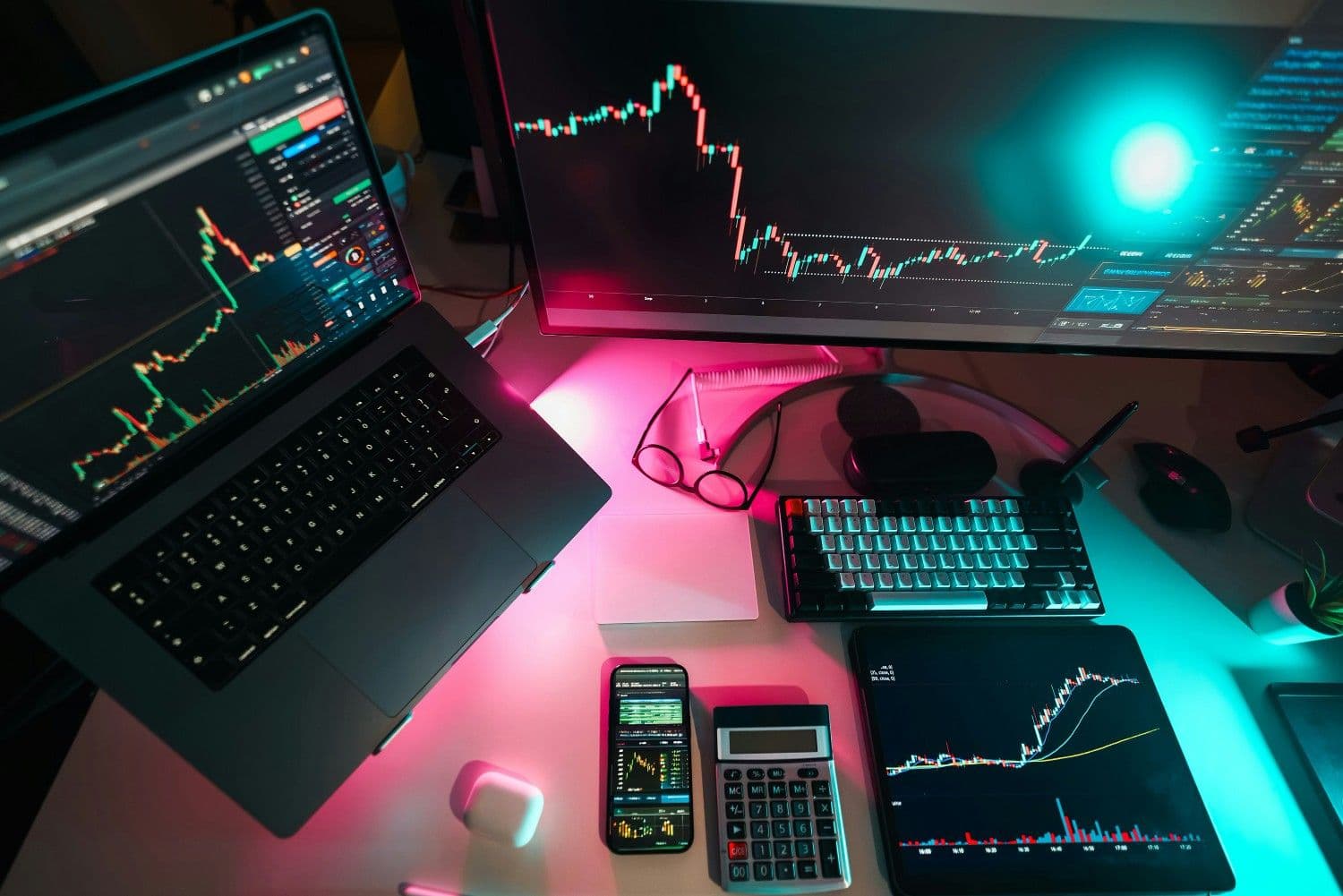
It's 9:14 AM on a Tuesday. Rohan is staring at three screens. His Zerodha Kite is open. TradingView is showing his indicators. Excel has his position sizing calculations. His phone has a timer set for 9:15:00. He's been doing this every morning for 23 months. His strategy works. He's got a 67% win rate. He's turned ₹42 lakhs into ₹68 lakhs. The edge is real. But he's exhausted.
TL;DR — Key Takeaways
- ✦Converting a manual strategy to automated requires translating every discretionary decision into explicit, unambiguous code logic — there are no human judgment calls at runtime.
- ✦The most common failure point: strategies with implicit rules that cannot be codified without losing their meaning.
- ✦Three-stage conversion: (1) document every entry, exit, sizing, and exception rule in plain English, (2) paper trade the algorithm-only version, (3) run parallel live vs automated for 30 days before fully switching.
- ✦Automated systems remove emotion from execution — but also the human ability to recognise regime changes. Build circuit breakers that pause the system when conditions fall outside the backtested envelope.
Last week, he missed the perfect entry because he was stuck in traffic. The week before, he fat-fingered an exit and turned a ₹12K winner into a ₹3K loser. Yesterday, he executed flawlessly but spent 6 hours glued to his screens for what could've been automated. "There's got to be a better way," he thinks. There is. It's called customized strategies, and it's not what you think.
The Myth of "Just Code What You Do"
Most traders approach automation like this: Hire a developer on Upwork, explain: "I buy when RSI < 30 and price breaks support", developer codes it in Python, deploy and... it loses money. What happened? Your manual trading brain makes 100 micro-decisions you don't even realize.
When you say "I buy when RSI < 30," what you actually mean is: "I buy when RSI < 30 AND it's not the first 15 minutes (too volatile) AND we're not in a massive gap-up day (false signals) AND my previous trade wasn't a loss in the same stock (emotional bias I've noticed) AND volume is above average (confirms conviction) AND it's not a Friday before a long weekend (holding risk)." Your brain processes all this in 2 seconds. You think it's "just RSI." It's not.
Priya learned this the hard way. She paid ₹45K for a developer to automate her moving average strategy. First week live: -₹87K. Why? The code did exactly what she SAID, not what she actually DID. She said: "Buy on the golden cross, sell on the death cross." She did: "Buy on golden cross UNLESS the daily timeframe is bearish UNLESS the weekly is showing reversal divergence UNLESS..." Converting manual trading into customized strategies isn't transcription. It's a translation.
The Real Process: Strategy Archaeology
Here's how professional custom trading strategies development actually works:
Phases of Development:
- Phase 1: What You Think You Do - You explain your strategy. The developer writes it down. Seems simple.
- Phase 2: What You Actually Do - You paper trade for 2 weeks while the developer watches your decisions. Not the outcomes, the DECISIONS. Why did you enter here but not there? Why did you exit early? Turns out, you have rules you don't even know you're following.
- Phase 3: The Edge Cases That Kill Algos - 95% of trading is routine. 5% is edge cases. Your manual brain handles them effortlessly. Customized strategies need edge cases coded from day one.
Vikram, a Nifty options trader: "I thought my strategy was purely technical. Turns out, I had an unconscious rule: never sell options when VIX is below 12. I'd been doing it for 8 months without realizing. The developer caught it by tracking my rejected signals."
The Fear Factor: "What If I Explain It Wrong?"
Let me address the elephant in the room. You're worried that if you fully explain your strategy to a developer, they'll steal it, sell it, or leak it. Valid concern. Here's how professional custom trading strategies development handles this: Separation of Logic and Parameters.
You tell the developer: "I use a momentum indicator combined with mean reversion signals." You DON'T tell them the exact lookback period, threshold values, or combination weighting. The developer codes the FRAMEWORK. You plug in the SECRET SAUCE yourself. Meera, systematic trader managing ₹1.2 crores: "My developer built the execution engine. I configure the parameters in a JSON file only I can access. They coded the 'how,' I control the 'what.' My edge stays mine."
With proper customized strategies development, YOU own the code. Not the platform. Not the developer. You. Want to hire someone else to maintain it later? Fine. Want to modify it yourself? Go ahead. Want to sell it to your trading group? Your call. This is fundamentally different from SaaS platforms where you rent access to someone else's system.
The Translation Layers: Where Magic Happens
Converting manual to automated isn't just "code my rules." It's building multiple layers:
Layer Breakdown:
- Layer 1: Signal Generation (Your Strategy Brain) - Manual: You see a pattern, feel conviction, trade. Automated: The code needs EXACT criteria. How do you quantify "looks like it's breaking out"? You break down your intuition into measurable factors like price > 20-day high, volume > 1.5x average.
- Layer 2: Risk Management (Your Survival Instinct) - Manually, you adjust position size based on "feel." Algo needs rules: Normal conditions 2% risk, High volatility 1% risk. At Arkalogi, we've built customized strategies for 200+ traders. The consistent pattern? Risk management is where manual traders have the MOST unconscious rules.
- Layer 3: Execution Logic (Your Order Flow) - Manual: You click buy, execute. Automated: Specify market/limit order, timeout, partial fills. Across 100 trades, bad execution logic costs ₹30K+. Your custom trading strategies need robust execution logic.
- Layer 4: Multi-Account Orchestration (Your Portfolio Management) - If you trade multiple accounts, you manually decide distribution. Your custom trading strategies need this logic automated: same signal to all accounts, proportional sizing, automatic overflow.
The Backtesting Reality Check
Here's where most manual-to-auto conversions fail: You backtest the automated version against historical data. It shows worse performance than your manual results. Panic sets in. "The algo doesn't work!" Actually, three things are happening:
Realities of Backtesting:
- Reality #1: Survivor Bias - Your manual track record includes only the trades you took. You ignored 50 signals that looked valid but "didn't feel right." Solution: Code your unconscious filters into your customized strategies.
- Reality #2: Execution Assumptions - Your manual backtest assumes: "I bought at the signal candle close price." Reality: You bought 30 seconds later at slippage. Your algo backtest should include realistic slippage and order delays.
- Reality #3: Market Regime Changes - You developed your strategy during a range-bound market. You're launching in a trending market. Solution: Build regime detection into your customized strategies.
The Testing Gauntlet (Don't Skip This)
Here's the proper validation path:
- Stage 1: Unit Testing (1-2 days) - Test individual components: Does signal generation detect patterns correctly? Does risk management cap position size properly?
- Stage 2: Backtesting (1 week) - Run against 2+ years of historical data. Look for performance consistency and recovery patterns.
- Stage 3: Paper Trading (2-4 weeks) - Live market, fake money. This reveals API issues and edge cases your backtest didn't include.
- Stage 4: Small-Scale Live (2-4 weeks) - Start with 10-20% of intended capital. Monitor obsessively. Only after proving profitability at small scale do you increase to full capital.
Want us to build this for you?
Talk to our teamThe Multi-Broker Advantage You're Missing
Here's something manual traders don't think about: When you trade manually, switching brokers is painful. With custom trading strategies built on proper architecture (like algotradingbridge), switching brokers is changing one config line. Why does this matter? Cost optimization (save on brokerage), performance testing (compare API speeds), and redundancy (automatic failover if one broker goes down).
The Incremental Evolution Nobody Talks About
Here's a secret: Your strategy will need updates. Not because it's broken. Because markets evolve. With SaaS platforms, you're locked to their feature set. With customized strategies, you make changes on your timeline. But beware of developers who disappear after delivery. At Arkalogi, we've delivered 1,800+ strategies with ongoing support included. Incremental changes don't cost ₹50K, they're part of the partnership.
The Speed Factor (Underrated Edge)
Manual trading speed: Total ~22 seconds. Automated custom trading strategies speed: Total ~0.23 seconds. That's 95x faster. Consider this: On a fast-moving stock during volatile periods, 20 seconds is ₹3-8 price movement. You're not trying to beat HFT firms. You're trying to get the price you INTENDED to get.
What Success Actually Looks Like
Let's be honest about what happens after you automate: Month 1: Relief + Paranoia. Month 2-3: Trust Building. Month 4-6: Optimization. Month 6+: Scaling. Rohan's journey: "I was spending 4-5 hours daily on active trading. Post-automation, I spend 20 minutes reviewing performance and making strategic decisions. I freed up 20+ hours weekly while maintaining, actually exceeding, my manual returns."
The Arkalogi Difference: Built for Traders, By Trading System Experts
We've converted manual strategies to customized strategies for 200+ traders. Every possible edge case, we've seen it. Our process includes Strategy Archaeology, Development + Testing, and Validation + Launch. We don't deploy until YOU'RE confident. Ongoing evolution is part of the package.
The Question You're Really Asking
It's not "Can my manual strategy be automated?" It's "Will the automated version preserve my edge while freeing my time?" The answer is yes, if you work with people who understand that strategy conversion is translation, not transcription. Your manual brain makes nuanced decisions. The goal isn't to dumb down your strategy, it's to make those nuances explicit. Bring your manual track record. We'll analyze what you're ACTUALLY doing (versus what you THINK you're doing) and show you how it translates to custom trading strategies. No obligation. No hard sell. Just honest assessment from people who've done this 1,800+ times. Because your proven edge deserves automation that respects its sophistication.
Already Have a Strategy? Let's Automate It.
At Arkalogi, we convert your trading logic into fully automated systems - integrated with your broker, backtested on real market data, and deployed on a live server. You describe your strategy in plain English. We handle everything else. Book a free honest assessment on WhatsApp to chat with us. No sales pitch. Just clarity on what's possible and what infrastructure you need to avoid common failure modes.
This post was written by Maria Iqbal, a Options Desk Strategist at Arkalogi.
If you want a custom strategy like this built for your broker, we can help.
Relevant Service
This post is relevant to our expertise in Custom Trading Strategy Development.
See service→