Short Strangle Options Strategy - Margin, Risk & Practical Indian Market Example
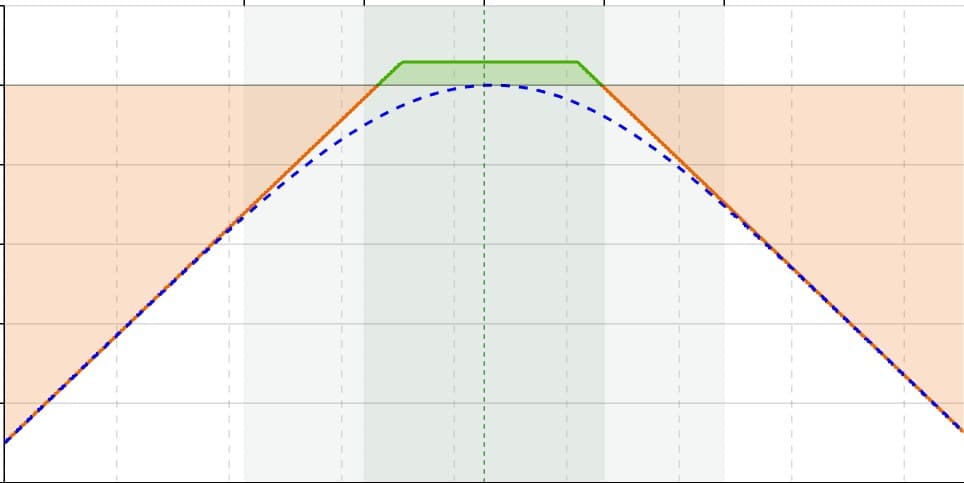
The Short Strangle is one of the most popular option selling strategies used by traders in Indian markets. It is simple in structure, works well in range-bound markets, and benefits from time decay (theta). However, despite its popularity, many traders underestimate the margin requirement and risk, which often leads to sudden drawdowns or margin calls.
TL;DR — Key Takeaways
- ✦A short strangle collects premium from both sides of the market by selling an OTM call and OTM put simultaneously — profit if the underlying stays range-bound.
- ✦On Nifty weekly options, short strangles are among the most commonly traded retail algo strategies due to India-specific premium decay patterns.
- ✦Maximum risk is theoretically unlimited — iron condors add wings to cap the downside, at the cost of lower net premium collected.
- ✦Margin requirements for short strangles on Indian indices have increased significantly post-2021 SEBI margin reforms — factor this into your capital allocation.
In this blog, we will understand what a Short Strangle is, how it works in Indian index options, margin requirements (SPAN + Exposure), risk-reward profile, when the strategy works and when it fails, and who should and should not use this strategy.
What Is a Short Strangle?
A Short Strangle involves selling an out-of-the-money (OTM) Call option and an OTM Put option of the same expiry.
Structure:
- Sell 1 OTM Call
- Sell 1 OTM Put
- Same underlying (Nifty / Bank Nifty / Fin Nifty)
- Same expiry
The trader profits if the underlying remains between the two strike prices until expiry.
Why Traders Use Short Strangle
- High probability of profit
- Benefits from time decay
- Works well in sideways markets
- Simple to execute
But simplicity does not mean low risk.
Example: Short Strangle in Nifty
Assume: Nifty spot at 21,600 with a Weekly expiry.
Trade Setup:
- Sell 21,900 Call at ₹60
- Sell 21,300 Put at ₹55
Total Premium Collected: ₹60 + ₹55 = ₹115. Lot size (Nifty): 50. Maximum profit = ₹115 × 50 = ₹5,750.
Margin Requirement (Very Important)
In Indian markets, margin consists of SPAN Margin and Exposure Margin. For an unhedged Short Strangle, margin is blocked on worst-case risk, not premium received.
Approximate margin for Nifty Short Strangle:
- ₹1.4 - ₹1.8 lakh per lot (varies with volatility)
- Key Point: Premium received does NOT reduce margin significantly.
Risk-Reward Profile
Maximum Profit
- Limited to total premium received
Maximum Loss
- Unlimited on both sides
- Large directional move can cause sharp MTM losses
Break-even Points
- Upper BE = Call strike + premium
- Lower BE = Put strike - premium
When Does Short Strangle Work Best?
Want us to build this for you?
Talk to our team- Low volatility environment
- No major events (RBI policy, budget, expiry volatility)
- Range-bound or slow trending markets
- When implied volatility is relatively high and expected to fall
When Does It Fail?
- Sudden directional breakout
- Volatility expansion
- Event-based trading days
- Near expiry sharp moves (This is where many traders face margin spikes and forced exits)
Common Mistakes Traders Make
- Selling strikes too close to spot
- Ignoring margin utilization
- No stop-loss or adjustment plan
- Over-leveraging with multiple lots
Risk Management & Adjustments
- Convert Short Strangle into Iron Condor by buying hedges
- Reduce position size
- Adjust untested side
- Exit early if range breaks decisively
Hedging significantly reduces margin and tail risk.
Who Should Use This Strategy?
- Traders who understand option Greeks, can monitor positions actively, and have sufficient capital for margin fluctuations
- Not suitable for beginners with small capital, traders who cannot monitor markets, or overnight risk-averse traders
Final Thoughts
The Short Strangle is a powerful income-generating strategy when used with proper margin awareness and risk control. Traders should focus not just on premium collection, but also on worst-case scenarios and margin impact.
In upcoming blogs, we will explore hedged versions of Short Strangle, margin comparison with Iron Condor, and low-margin alternatives for retail traders.
"Disclaimer: This content is for educational purposes only and not investment advice"
Already Have a Strategy? Let's Automate It.
At Arkalogi, we convert your trading logic into fully automated systems - integrated with your broker, backtested on real market data, and deployed on a live server. You describe your strategy in plain English. We handle everything else. Book a free honest assessment on WhatsApp to chat with us. No sales pitch. Just clarity on what's possible and what infrastructure you need to avoid common failure modes.
This post was written by Rina Sethi, a Algo Trading Developer at Arkalogi.
If you want a custom strategy like this built for your broker, we can help.
Relevant Service
This post is relevant to our expertise in Custom Trading Strategy Development.
See service→