Can ChatGPT Create a Trading Bot? AI Trading Reality vs Hype
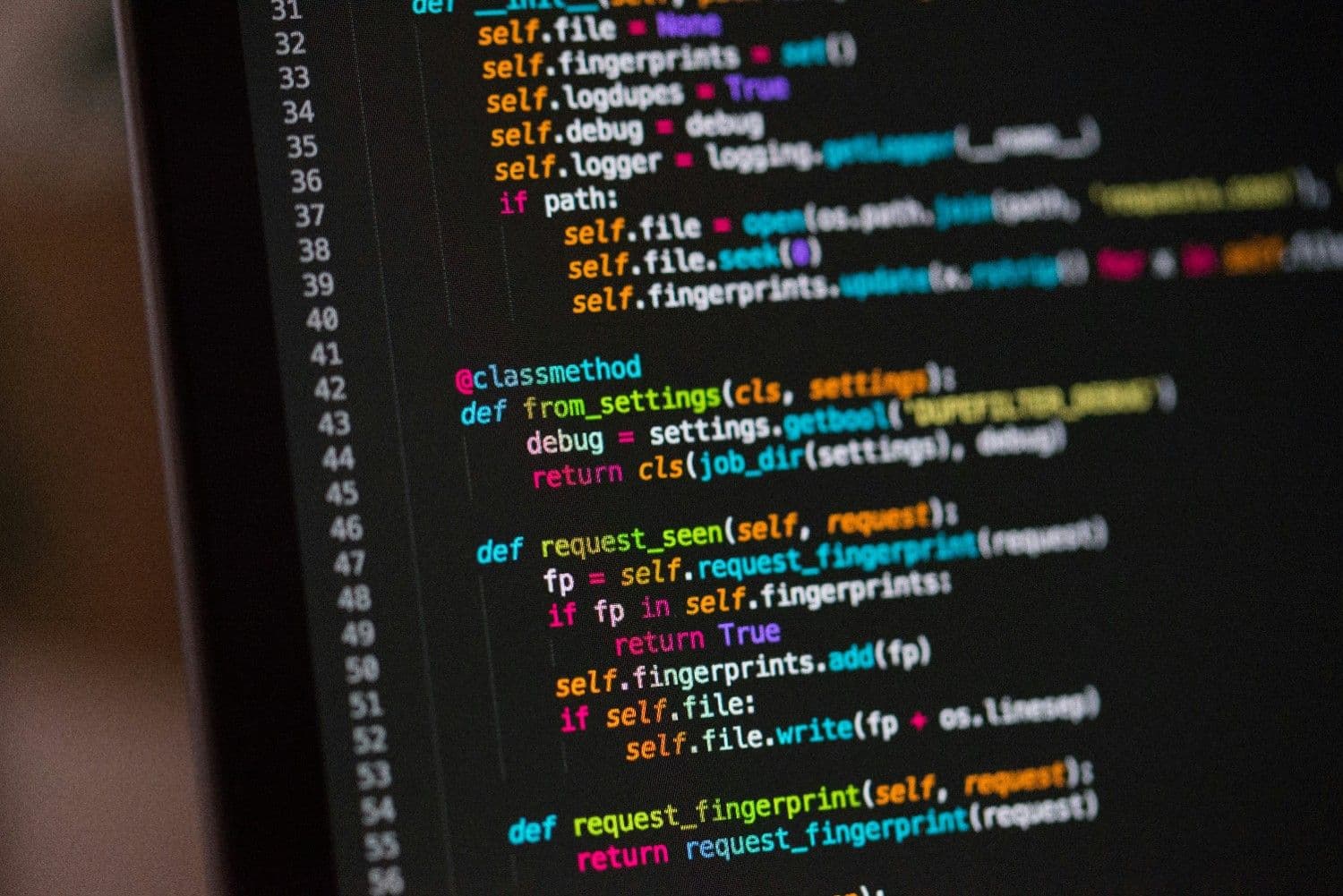
'ChatGPT, create a profitable trading bot for me.' I asked this exact question. So did thousands of other traders in 2024-2025.
ChatGPT delivered 200 lines of Python code in 30 seconds. It looked sophisticated. It had machine learning. It used technical indicators. I deployed it with 5 lakhs test capital. It lost 87,000 rupees in 11 days.
Let me show you exactly what happened, why AI-generated trading bots fail, and what AI actually does well in algorithmic trading. Because the answer to 'can ChatGPT create a trading bot' is technically yes but practically useless.
The ChatGPT Trading Bot Experiment: Real Results
Here's what ChatGPT generated: a Moving Average Crossover strategy buying when the 50-day MA crosses above the 200-day MA and selling when it crosses below. Looks reasonable. But here is what the code was missing:
Problems with the AI-generated code:
- No risk management (no stop-losses, no position sizing)
- No broker integration (didn't actually connect to Zerodha or AngelOne)
- Curve-fitted parameters (worked on backtest data, failed on live market)
- No edge cases (what if API fails, network times out, or partial fill occurs?)
- Ignored transaction costs (brokerage, slippage, taxes)
- No regime detection (same parameters in trending and ranging markets)
Live results over 11 days:
- Week 1: -22,000 (caught in choppy market, constant whipsaws)
- Week 2: +8,000 (got lucky with a trend)
- Total: -87,000 rupees in 11 days
ChatGPT can write code. It cannot create profitable trading strategies.
Can AI Do Algorithmic Trading? The Nuanced Answer
Can AI do algorithmic trading successfully? The answer is: AI is a tool, not a strategy.
What AI can do well in trading:
- Pattern Recognition: identifying chart patterns faster than humans, detecting correlations between assets, finding historical analogs to current conditions
- Parameter Optimization: testing thousands of parameter combinations, finding optimal stop-loss distances, determining best position sizing ratios
- Regime Detection: classifying market as trending, ranging, or volatile and switching strategy parameters accordingly
- Data Processing: analyzing news sentiment, processing economic indicators, monitoring social media for early signals
What AI cannot do despite the hype:
- Create edge from nothing: if no systematic edge exists in your approach, AI cannot magically generate one
- Predict the unpredictable: black swan events, policy changes, geopolitical shocks are as invisible to AI as to humans
- Replace risk management: AI doesn't inherently know to use stop-losses or proper position sizing
- Eliminate market randomness: trading has irreducible variance that AI cannot remove
How Is AI Used in Algorithmic Trading? The Real Applications
In institutional trading, here is what hedge funds actually do with AI:
Order Execution Optimization
Instead of buying 100,000 shares at once (which moves the price), AI calculates buying 5,000 shares every 3 minutes over 4 hours. Value: saves 0.1-0.3% on execution, which means millions on large institutional orders.
Market Making and Spread Adjustment
AI adjusts bid-ask spreads based on volatility and order flow. During calm markets: tight spreads. During volatile moments: wider spreads. This reduces inventory risk while maintaining profitability.
Statistical Arbitrage
AI detects temporary mispricings between correlated assets. If Reliance is up 2% but HDFC is flat (despite a usual 0.8 correlation), AI detects and trades the spread. Tiny edges of 0.1-0.2% at high frequency generate significant annual returns.
Sentiment Analysis
AI analyzes news, earnings calls, and social media for early sentiment shifts before they fully impact price. None of these applications are 'AI creates profitable strategy from thin air.' They are all 'AI optimizes an existing systematic approach.'
Can You Create Your Own Trading Platform with AI Tools?
Can you create your own trading platform using AI assistance? Yes, but AI is the assistant, not the architect.
How AI helps in custom trading platform development:
- Code Generation: AI generates boilerplate code (API connections, data structures, standard indicator formulas) and handles about 40% of the work
- Strategy Translation: AI generates initial code structure from your strategy description, then developers add risk management, position sizing, and multi-account execution
- Testing and Optimization: AI rapidly backtests across 5+ years of data, tests thousands of parameter combinations, and flags overfitting
What must remain human-driven:
- Your unique strategy logic (AI doesn't know your edge)
- Production-grade error handling for real-world failures
- Broker-specific API quirks (Zerodha vs AngelOne differ significantly)
- Risk management design and circuit breaker logic
Can I Make My Own Algo for Trading? The DIY Reality
Can I make my own algo for trading without professional developers? Yes, with caveats.
DIY Algo Development Timeline:
- Month 1-2: Learn Python basics (40-60 hours investment)
- Month 3-4: Learn broker API integration - Zerodha Kite Connect, AngelOne SmartAPI (30-50 hours)
- Month 5-6: Build and test basic strategy with paper trading (60-100 hours)
- Total: approximately 6 months, 130-210 hours
DIY makes sense when:
- You have a programming background
- Your strategy is simple (single indicator, clear rules)
- You trade one account with one broker
- You have time to invest in learning
Want us to build this for you?
Talk to our teamProfessional development makes more sense when:
- No coding background (learning curve is too steep)
- Complex strategy (multi-timeframe, options selling)
- Multi-account execution needed
- Need broker-agnostic architecture (algotradingbridge)
- Want production-grade error handling, monitoring, and alerts
Cost comparison: DIY requires 200 hours at roughly 2,000 rupees opportunity cost per hour equals 4 lakhs plus 6 months. Professional development costs 80K-2.5L and delivers in 3-4 weeks. For most traders, professional development is cheaper when time is factored in.
Best AI for Algo Trading: What Actually Works
Honest assessment of AI tools for trading:
- ChatGPT and Claude: good for generating boilerplate code, explaining indicator calculations, and debugging syntax. Not suitable for creating profitable strategies or building production systems. Best use: 'how do I calculate Bollinger Bands in Python' gets you 80% of the way there.
- GitHub Copilot: good for auto-completing functions and suggesting code structure, speeds up professional development by 30-40%. Not suitable for strategy logic or robust risk management.
- Machine Learning Libraries (scikit-learn, TensorFlow): genuinely useful for pattern recognition in price data, regime classification, and parameter optimization. Not suitable for direct price prediction due to market noise.
- Custom AI Models: used by institutions for sentiment analysis from news and alternative data, order execution optimization. Requires millions in infrastructure and is not practical for retail traders.
Reality: 95% of profitable retail algo trading uses rules-based strategies, not AI. The edge comes from systematic human logic, not machine learning.
The Arkalogi Approach: AI-Assisted, Human-Validated
We've delivered 1,800+ custom trading strategies. Here's how we use AI:
What We Use AI For:
- Code Generation: boilerplate functions and standard indicators (saves 20-30% development time)
- Testing: automated backtesting across parameter ranges
- Regime Detection: ML models classify market conditions (trending, ranging, volatile)
- Optimization: finding optimal stop-loss distances and position sizing
What We Do NOT Use AI For:
- Strategy Creation: your proven edge comes from you, not AI
- Risk Management Logic: humans design circuit breakers based on capital and risk tolerance
- Production Deployment: edge case handling requires experienced developer oversight
Our Tech Stack:
- Python (primary language)
- Algotradingbridge (broker-agnostic: Zerodha, AngelOne, Finvasia, Upstox, Arham Wealth, GoPocket)
- AI-assisted coding (GitHub Copilot for faster development)
- Human-validated logic (every line reviewed by experienced developers)
Result: 30-40% faster development without sacrificing quality or reliability.
The Bottom Line: AI Is a Tool, Not a Miracle
- Can ChatGPT create a trading bot? Yes, a non-functional one that loses money
- Can AI do algorithmic trading? Yes, as an optimization tool within strategies designed by humans
- Can you create your own trading platform with AI? Yes, using AI for code generation and humans for strategy and edge cases
- Best AI for algo trading? ChatGPT and Claude for learning, GitHub Copilot for development speed, ML libraries for regime detection
What actually creates profitable algo trading: a proven manual edge (you bring this), systematic rules (codeable logic), professional development or 200+ hours DIY, rigorous testing (backtest, paper trade, small live, then scale), and ongoing optimization as markets evolve.
AI helps with development and optimization. It cannot create your edge. AI is the hammer. Your strategy is the blueprint. Professional development is the carpenter.
Frequently Asked Questions
Already Have a Strategy? Let's Automate It.
At Arkalogi, we convert your trading logic into fully automated systems - integrated with your broker, backtested on real market data, and deployed on a live server. You describe your strategy in plain English. We handle everything else. Book a free honest assessment on WhatsApp to chat with us. No sales pitch. Just clarity on what's possible and what infrastructure you need to avoid common failure modes.
This post was written by Leena Shah, a Machine Learning Engineer at Arkalogi.
If you want a custom strategy like this built for your broker, we can help.